Eastertide Earth Day Sermon on Gospel of Mark 9:38–50
In Easter season, we expect light.
We expect lilies, alleluias, and the quiet astonishment of an empty tomb.
And yet today, the Gospel gives us something else entirely.
Warnings.
Harsh images.
Talk of stumbling blocks, cutting off hands, and the fires of Gehenna.
It doesn’t sound like Easter.
But maybe it is.
Because resurrection is not denial.
It is transformation.
And transformation always tells the truth about what must change.
What Kind of World Are We Living In?
On this Earth Day, we don’t have to look far to see the truth about the world we are shaping:
• Waters that cannot sustain life
• Air that harms the most vulnerable
• Lands stripped, burned, or forgotten
• Communities—often poor, often marginalized—bearing the weight of it all
And so we come to a hard question:
What does resurrection mean in a world like this?
Is Easter only about what happens after we die?
Or is it about what God is doing—right here, in the life of the world?
“Whoever Is Not Against Us Is for Us”
Jesus begins by widening the circle.
The disciples are anxious—someone outside their group is doing good in Jesus’ name.
They want to stop him.
But Jesus says:
“Do not stop him… Whoever is not against us is for us.”
This is a word the Church needs to hear. A word that I need to hear.
Because the work of healing creation is not limited to us.
All around us, people are tending the earth:
• Scientists restoring wetlands
• Communities organizing for clean water
• Indigenous leaders protecting sacred land
• Neighbors planting gardens, reducing waste, paying attention
They may not speak our language of faith.
But they are not against the work of life.
And Jesus says: recognize them. Honor them. Join them.
Because resurrection is already stirring beyond our boundaries.
And then the tone of the Gospel shifts.
Jesus speaks of “little ones”—and warns against causing them to stumble.
The language is severe because the stakes are real.
So we have to ask:
Who are the “little ones” now?
They are:
• Children inheriting a changing climate
• Coastal communities facing rising waters
• Marginalized Neighborhoods living near pollution
• Species disappearing without a voice
To harm the earth is not neutral.
It is not abstract.
It is a stumbling block placed in the path of the vulnerable.
And Jesus says: THIS is where my kingdom needs to be!
Jesus names that danger with a word his listeners would have known well: Gehenna.
This was The Valley of Hinnom.
A real place.
A place that had come to symbolize everything opposed to God:
• A site of idolatry to the false god Molech.
• A place associated with child sacrifice
• Later, a place of burning refuse and waste
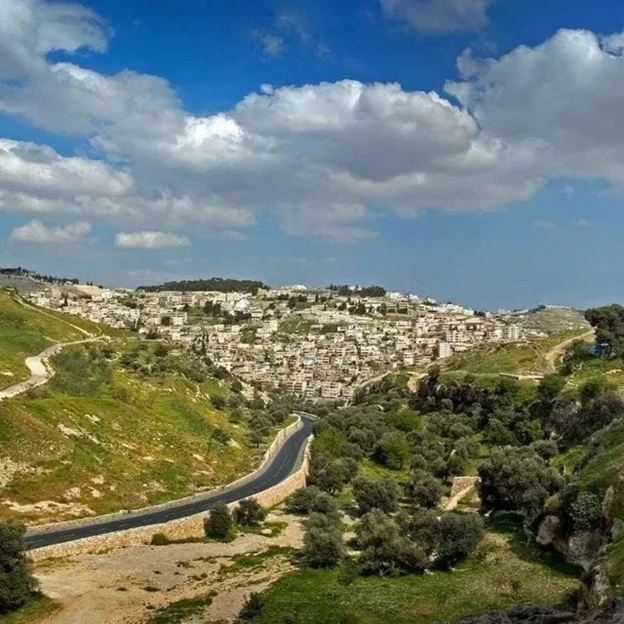
The Valley of Hinnom (Gehenna) is a valley bordering ancient Jerusalem, notorious in the Bible for idolatrous child sacrifices to Molech. Because of these atrocities, it was cursed by Jeremiah and later viewed as a place of filth and burning, serving as the biblical archetype for hell (Gehenna) due to its imagery of unending fire.
Gehenna is what happens when a society decides:
• Some lives are expendable
• Some places can be sacrificed
• Some destruction is acceptable
Gehenna is not just a location.
It is a pattern.
And if we are honest, we still know that pattern.
We see it wherever:
• Land is treated as disposable
• People are treated as collateral
• Convenience is valued over life
“Cut It Off” — The Courage to Change
So Jesus says something startling:
If your hand causes you to stumble, cut it off.
This is not about self-harm.
It is about urgency. Jesus chooses this harsh language to try and emphasize to his followers What true discipleship looks like.
It is about refusing to cling to what destroys life.
In our context, we might hear it this way:
If a way of living is harming the earth—
if it is harming the vulnerable—
if it is placing stumbling blocks in the path of others—
let it go.
Not because God demands suffering.
But because God desires life.
Better to lose what diminishes life
than to keep what destroys it.
Turning Toward Easter
And here is where Easter changes everything for us.
Because the story of our faith does not end with warning.
It moves through death—and into life.
The resurrection of Jesus Christ is not just a personal promise.
It is a cosmic one.
It declares:
• Death does not have the final word
• Sin does not get to define the future
• And creation itself is not abandoned
Resurrection is not escape from this world.
It is God’s commitment to renew it.
From Gehenna to Garden
And this is where the image of Gehenna becomes unexpectedly hopeful. (Look at the photo in your bulletin.)
Because that valley—once associated with destruction, death and darkness
today bears signs of life.
Green space.
Walking paths.
Places where people gather.
A park where children play.
A place of light and life.
It is not perfect.
But it is not what it once was. It is transformed. Resurrected.
And that is the point.
If a place like Gehenna can be reclaimed,
then no place is beyond the reach of God’s renewal.
Not polluted waters.
Not damaged ecosystems.
Not forgotten communities.
Resurrection means that God does not abandon ruined places.
God restores them.
“Salted with Fire”
Jesus says:
“Everyone will be salted with fire… Have salt in yourselves.”
Fire, here, is not just destruction.
It is refinement.
Transformation.
The burning away of what harms so that life can flourish.
And salt?
Salt preserves.
Salt heals.
Salt makes life possible.
In Easter light, this becomes a calling:
Be people who preserve life.
Be people who participate in transformation.
Practicing Resurrection
Because resurrection is not just something we believe.
It is something we practice.
Every time we choose:
• Restoration over neglect
• Care over convenience and
• Justice over indifference
We are practicing resurrection.
Every time a wetland is restored…
Every time a community gains clean water…
Every time a patch of earth is tended with love…
We are declaring:
Death does not get the last word here.
The Garden
And maybe this is the most fitting place to end.
On Easter morning, when Mary Magdalene encounters the risen Christ, she does not recognize him at first.
She thinks he is the gardener.
And maybe she wasn’t entirely wrong.
Because the risen Christ is still tending the world.
Still bringing life out of death.
Still calling creation into fullness.
Final Invitation
So the question for us is not simply:
Do we believe in resurrection?
The question is:
Will we practice it?
Will we:
• Remove what harms
• Protect what is vulnerable
• Participate in God’s renewal of the earth
Will we refuse the pattern of Gehenna—
and help cultivate something more like a garden?
(Maybe you will have take the picture of renewed Gehenna home and write “practice resurrection” across it. Post it somewhere you can be reminded every day.)
Closing
Because this is the hope of Easter:
Not that we escape the world.
But that God is redeeming it.
Not someday only.
But even now.
Until every place of death
becomes a place of life.
Thy Kingdom come. Amen.
Until every valley
becomes green again.
Until all creation
shares in the resurrection of Christ.
Amen.