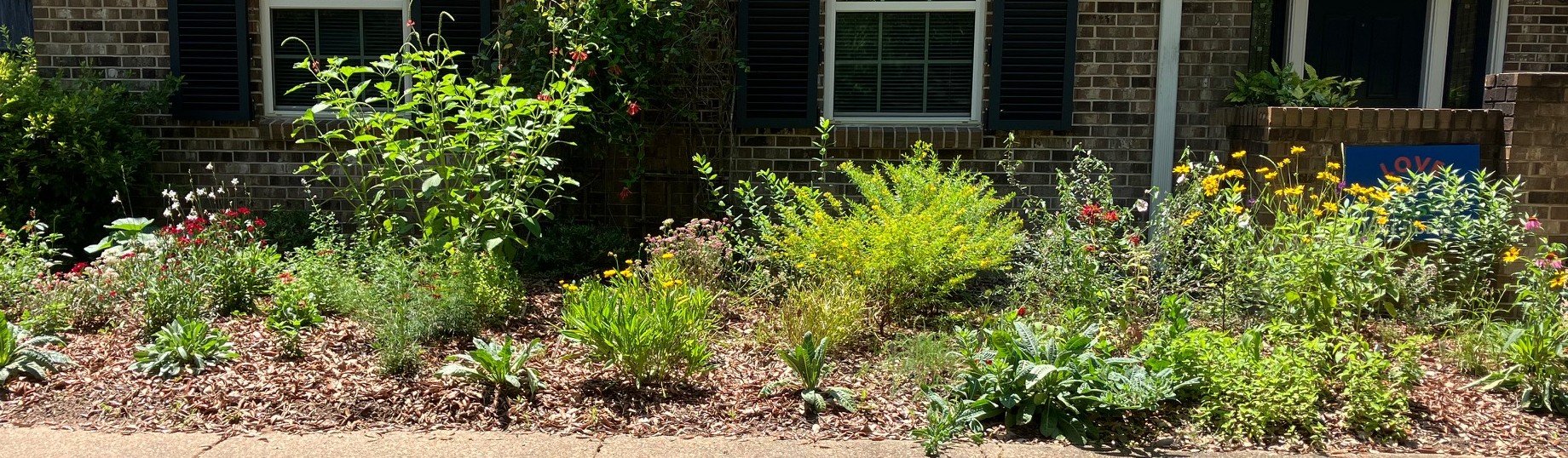
“But what can just one person do?” That question is often asked when church groups confront the scale of climate change and biodiversity loss. Gulf Coast Creation Care’s answer is direct: start where we live, worship, and gather by planting native pollinator gardens that restore habitat, one congregation and one household at a time.
Author Jason Anthony frames the urgency clearly: “…in reality, there is only the biodiversity crisis - a jargon term for the fate of life on Earth - and the heating climate is a major component of it. But if we’re not actively restoring lost habitat, reducing chemical use in agriculture, dreaming up ways to reduce ocean acidification and deoxygenation, and conserving areas of land and sea necessary for large-scale resistance to increased extinctions, then we’re not paying attention.” (Jason Anthony, Field Guide to the Anthropocene, June 19, 2026)
Gulf Coast Creation Care is paying attention by sponsoring a practical program that helps individuals, families, and faith communities protect biodiversity by creating habitat for some of creation’s tiniest keystone species: insects. Inspired by Doug Tallamy’s popular Homegrown National Park program, GCCC is challenging every congregation to take two visible steps:
1. Establish a native plant pollinator garden on church property.
2. Invite every family in the congregation to create a native plant pollinator garden at home.
These gardens don’t have to be ambitious – a 3-ft. x 3-ft. space, or even a container garden, is all you need. GCCC has assembled a webpage of resources to help you get started, including inspiring words from Dr. Tallamy himself, “how to” videos and websites, and lists of local native plant nurseries. As congregations and households join the effort, GCCC plans to add an interactive map so participants can see the growing network of native pollinator gardens along the Gulf Coast and, if they choose, add their own garden location and photo.
Visit our new resource page, or check out “Getting Started” on the Homegrown National Park website, and begin planning your own garden today. South Alabama Land Trust’s Native Habitat Program has an extensive list of local native (good) and invasive (bad) plant species to help you with plant selection. Also check out this inspiring 20-minute video, “What’s the Rush” by Dr. Tallamy, to begin visioning your project. Together, our churches and homes can turn faithful stewardship into visible, measurable habitat restoration across the Gulf Coast.